
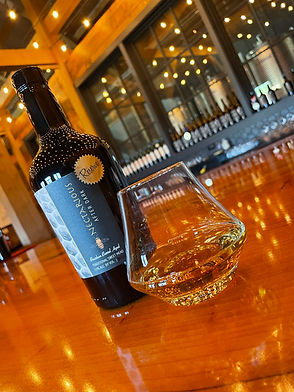

Tasting Room Open
Fri-Sun 12-5 year-round
Relax and sip our award-winning handcrafted meads at the meadery tasting room overlooking the farm.
~


What is Mead?
Honey. Water. Yeast.
Simply put, mead is wine made with honey. Known as the world's most ancient fermented beverage; residues of mead have even been found on urns in Egyptian tombs. Mead's alcohol by volume (ABV) typically ranges 6-18%. It can be made dry, semi-sweet, or sweet depending on the amount of honey used and the duration of fermentation. Many meaderies produce carbonated 'session' meads, also called hydromels, made with higher water content, making them lower alcohol. Fruit, herbs, spices, and even peppers can be added to mead to create unique flavors reflecting the local culture and 'terroir' of where it is made.
~

World of Mead
Mead is diverse.
There are many styles of mead across the globe and throughout history, made with countless varietals of honey from varying nectar sources. Meadmakers often experiment with unique ingredients and use juice from fruit in place of water during fermentation. Here are some of the more well-known types of mead:
Traditional (honey, water, yeast)
Sack or Great Mead (very sweet)
Session Mead or Hydromel (<10% ABV)
Melomel (fruit)
Metheglin (spices)
Capsicumel (peppers)
Cyser (apples)
Pyment (grapes)
Bochet (caramelized honey)
Braggot (grain/beer)
Tej (Ethiopian gesho - bitter herb)
Hippocras (wine, cinnamon, brandy)
Viking Blood (cherries)
~

Our Style
Traditional with a twist.
We tend to be purists about mead. We believe in slow fermentations and the magic of aging to bring out the best aroma and depth of flavor from the honey and ingredients we use. We specialize in traditional and barrel-aged meads complemented by seasonal specialty batches often made with our organic farm-grown ingredients including apples, pears, blueberries, and lavender. We also get creative with distinct varietals of honey like blackberry, meadowfoam, orange, and mesquite blossom ~ each nectar source giving unique honey characteristics and aroma profiles that change with the seasons.
~

Mielâge
The Age of Honey
Honey harvests vary significantly year-to-year due to changing weather, fluctuating nectar sources, and local environmental shifts. These changes directly affect the color, aroma, flavor, and volume of honey, making it a unique, seasonal, highly localized product. This year-to-year change also affects wine grapes and is why the wine industry uses the word “vintage” to differentiate and identify each harvest year. Unfortunately, regulatory agencies do not currently allow mead producers to use a vintage year on labels as an identifier in the same context as grape wine. They maintain that it is difficult to track which year honey is harvested, and that producers may blend honeys from different seasons when making mead. Meadmakers are challenging this presumption with regulators, but it may never come to pass for mead to officially use the word or apply a “vintage” year on labels the same as grape wine. At The Mead Werks, we carefully track when the honey we use for our mead is harvested. It’s meaningful to us because each honey harvest season is unique, and that makes every batch of mead unique, even when using the same recipe. Therefore, to give our mead an identity tied to the nuances and “terroir” of each season’s honey harvest, we are introducing a word that we invented using a similar suffix as vintage but rooted in honey...
Mielâge (Pronounced meel-ahj)
In French, ‘miel’ means honey, and ‘âge’ means age. As a tribute to our meadmaker’s French heritage, you may notice us using the word mielâge to identify the year in which the honey was harvested for our meads accompanied by a description of that harvest’s unique flavor, color, and aroma profile.
~